A1 ~たら/~ても
A2 ~たら①
Meaning:
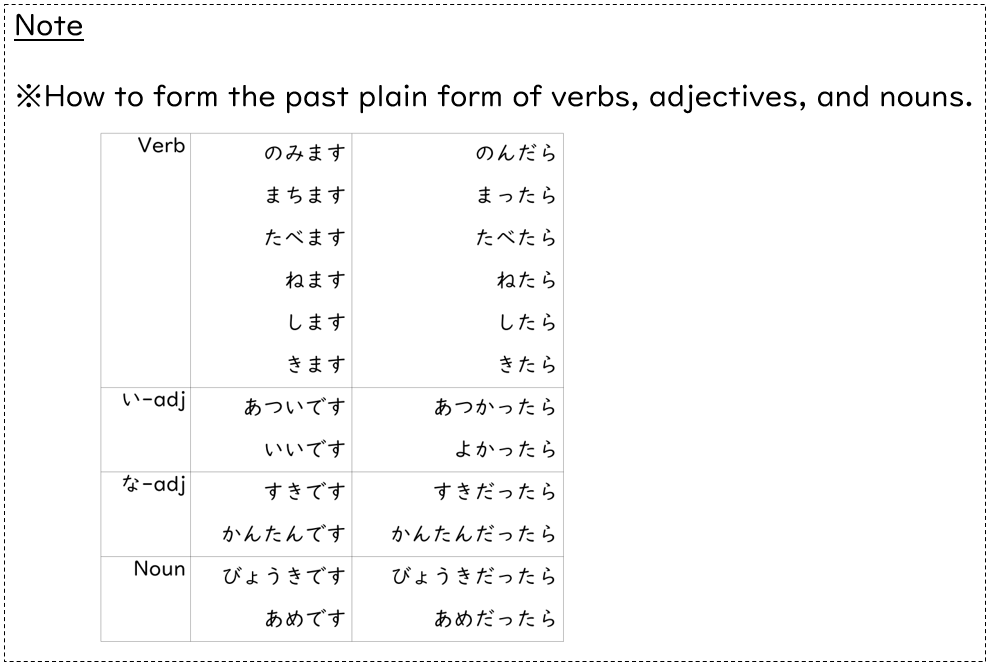
- When「ら」is added to the past plain form of verbs, adjectives, or nouns, it becomes「~たら」and makes a conditional sentence. It means“if”.
- It is often used in the form“もし~たら.”
How to use:
[た-form] ら、~
Example:
- もし1億円あったら、車を買いたいです。- If I had 100 million yen, I would like to buy a car.
- 時間がなかったら、アニメを見ません。- If I don’t have time, I won’t watch anime.
- 雨が降らなかったら、散歩しましょう。- If it doesn’t rain, let’s go for a walk.
- 暑かったら、エアコンをつけてください。- If it’s hot, please turn on the air conditioner.
- 明日、暇だったら、友達と遊びます。- If I’m free tomorrow, I will hang out with my friend.
- 日曜日、雨だったら、うちでゲームをします。- If it’s rainy on Sunday, I will play games at home.
A3 ~たら②
Meaning:
- “~たら”means“after”or“when”. It is used to say what someone will do or what will happen after something finishes.
- The main clause is always in the present tense.
How to use:
[た-form] ら、~
Example:
- 仕事が終わったら、うちへ帰ります。- When I finish work, I will go home.
- 60歳になったら、会社を辞めます。- When I turn 60, I will quit my job.
- うちへ帰ったら、シャワーを浴びます。- When I get home, I will take a shower.
A4 ~ても
Meaning:
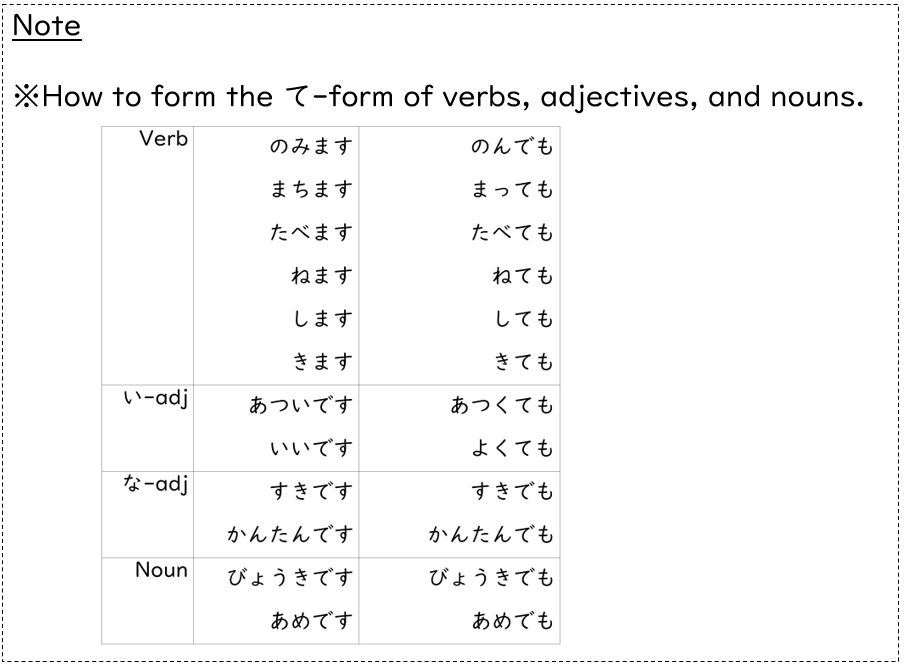
- “~ても”means“even if.”It shows that the result does not change even if something happens.
- “いくら”is used with“~ても/~でも”to emphasize the degree.
How to use:
[てfomr] も、~
Example:
- 雨が降っても、サッカーをします。- Even if it rains, I will play soccer.
- いくら練習しても、上手になりません。- No matter how much I practice, I don’t get better.
- お金がなくても、毎日楽しいです。- Even if I don’t have money, I am happy every day.
- いくら高くても、買います。- No matter how expensive it is, I will buy it.
- 暇でも、ゲームをしません。- Even if I’m free, I don’t play games.
- 日曜日でも、早く起きます。- Even on Sundays, I wake up early.
Fun Japanese Lessons: Talk and Learn with Me!
Do you want to practice Japanese? Join my lessons!
If you’re interested, please contact me using the inquiry form below.