A1 ~はわたしに~をくれます
Meaning:
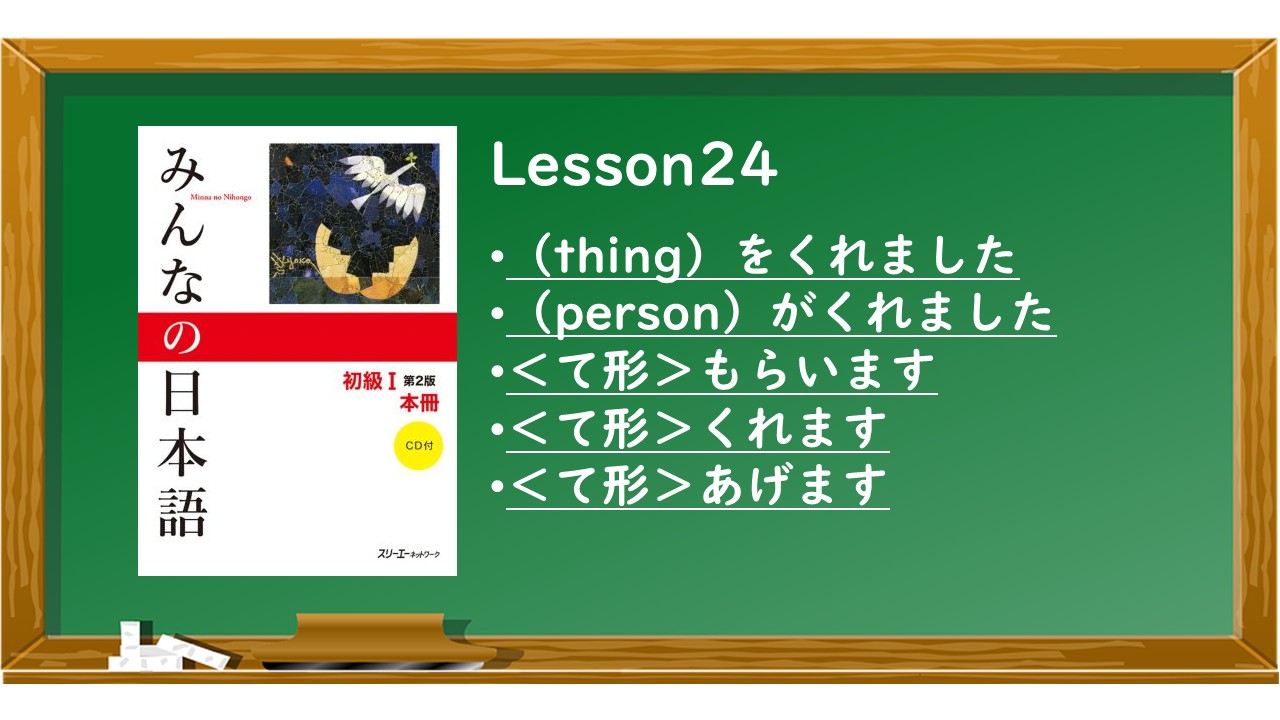
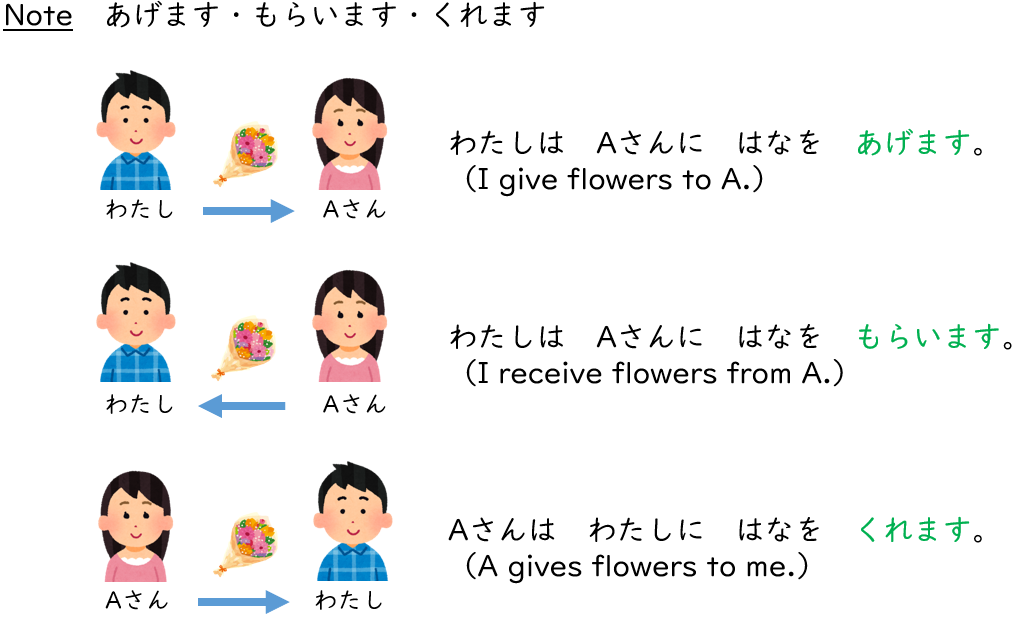
- In Lesson 7, you learned that あげます means“to give.”However, あげます cannot be used when someone gives something to you (the speaker).
×Leeさんはわたしに花をあげました。
In this case くれます is used.
- When using くれます,“わたしに”does not have to be said.
How to use:
[Noun] をくれます
Example:
- Leeさんはわたしにチョコレートをくれました。- Lee gave me chocolate.
- Tomさんはコーヒーをくれました。- Tom gave me coffee.
A2 ~がくれました
Meaning:
- This pattern is used when you want to say who gave something to you. In this case, the subject with new information is marked with が.
How to use:
[Noun(person)] がくれました
Example:
- このかばんは彼がくれました。- This bag was given to me by him.
- おいしいチョコレートですね。…ええ、田中さんがくれました。- This chocolate is delicious.…Yes, Tanaka gave it to me.
- すてきなネクタイですね。…ええ、彼女がくれました。- That’s a nice tie. Yes, she gave it to me.
A3 ~てもらいます
Meaning:
- This expression is used when the speaker describes an action with a feeling of gratitude.
How to use:
[Noun(person)]に[て-form]もらいます
Example:
- わたしはLeeさんに傘を貸してもらいました。- I had Lee lend me an umbrella.
- 友達に東京を案内してもらいました。- I had my friend show me around Tokyo.
- 父に空港まで送ってもらいました。- I had my father take me to the airport.
A4 ~てくれます
Meaning:
- Like て-form もらいます, this expression also shows the receiver’s feeling of gratitude. The difference is that with て-form もらいます, the receiver of the action is the subject of the sentence. With て-form くれます, the person who does the action is the subject. This means the person who does the action (the subject) does the action willingly.
How to use:
[Noun(person)]は[て-form]くれます
Example:
- Leeさんは傘を貸してくれました。- Lee lent me an umbrella.
- 父はディズニーランドへ連れて行ってくれました。- My father took me to Disneyland.
- だれがお金を払ってくれましたか。…Tomさんが払ってくれました。- Who paid the money for you?…Tom did.
A5 ~てあげます
Meaning:
- て-form あげます is used when someone does something for another person with kindness.
- If the speaker does the action and the listener receives it, this expression may sound patronizing. So, it is better not to use this expression with someone you do not know well or with someone older or higher in status than you. When offering help to someone who is not very close, use ます-form + ましょうか (Lesson 14).
How to use:
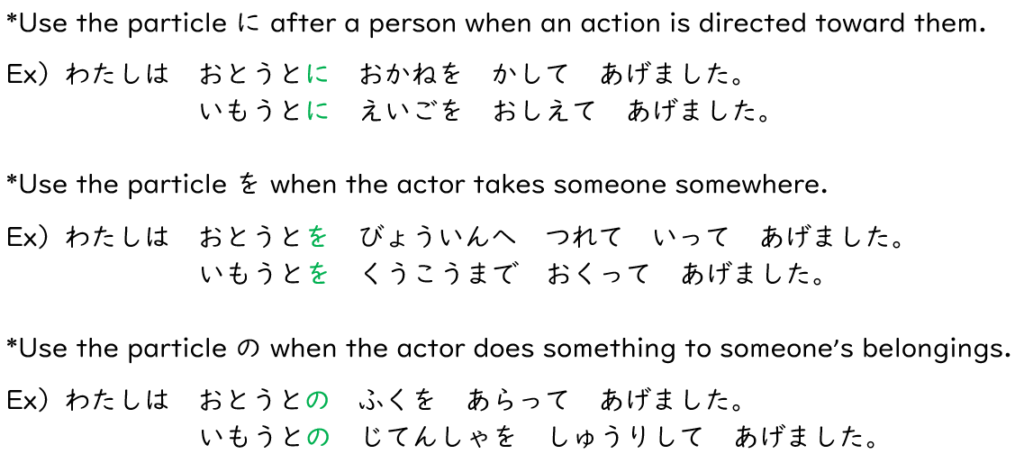
[Noun(person)]に/を/の[て-form]あげます
Example:
- わたしは夫にカレーを作ってあげました。- I made curry for my husband.
- わたしは夫を駅まで送ってあげました。- I took my husband to the station.
- わたしは夫の部屋を掃除してあげました。- I cleaned my husband’s room for him.
Fun Japanese Lessons: Talk and Learn with Me!
Do you want to practice Japanese? Join my lessons!
If you’re interested, please contact me using the inquiry form below.