A1 ~がすきです/きらいです
Meaning:
- “すき” means “like”.
- “きらい” means “dislike”.
How to use:
[Noun] がすきです/きらいです
Example:
- すしが好きです。- I like sushi.
- ビールが好きですか。…はい、好きです。いいえ、好きじゃありません。- Do you like beer? … Yes, I do. / No, I don’t.
- たばこが嫌いです。- I dislike cigarettes.
- どんなスポーツが好きですか。…サッカーが好きです。- What kind of sports do you like? … I like soccer.
A2 ~がじょうずです/へたです
Meaning:
- “じょうず” means “good at”.
- “へた” means “bad at”.
- When you talk about yourself, do not use “じょうず”. Use “とくい” instead.
How to use:
[Noun] が じょうずです/へたです
Example:
- 母は料理が上手です。- My mother is good at cooking.
- 父は料理が下手です。- My father is bad at cooking.
- 鈴木さんは歌がとても上手です。- Mr. Suzuki is very good at singing.
- 彼はダンスがあまり上手じゃありません。- He is not very good at dancing.
- わたしはテニスが得意です。- I am good at tennis.
A3 ~がわかります
Meaning:
- “わかります” means “I understand.”
How to use:
[Noun] がわかります
Example:
- Tomさんはひらがながわかります。- Tom understands Hiragana.
- Leeさんは日本語がわかりません。- Mr. Lee doesn’t understand Japanese.
- 英語がわかりますか。…はい、わかります。/いいえ、わかりません。- Do you understand English? … Yes, I do. / No, I don’t.
よく/だいたい/すこし/あまり/ぜんぜん
Meaning:
- よく:well, much
- だいたい:mostly
- すこし:a little, a few
- あまり:not very
- ぜんぜん:not at all
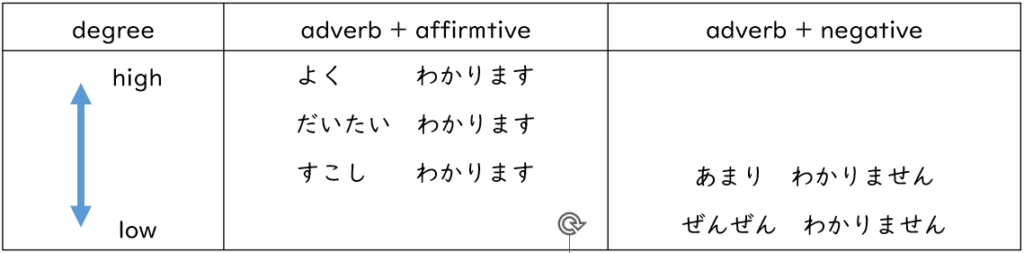
Example:
- 英語がよくわかります。- I understand English well.
- 英語が全然わかりません。- I don’t understand English at all.
A4 ~がわかります
Meaning:
- This use of “あります” expresses that someone possesses or owns something (for objects).
- “あります” is used not just for tangible objects like a car, but also for intangible things such as time, events, and plans.
How to use:
[Noun] があります
Example:
- 自転車があります。- I have a bicycle.
- パソコンがありますか。…はい、あります。/いいえ、ありません。- Do you have a computer? … Yes, I do. / No, I don’t.
- 土曜日、約束があります。- I have an appointment on Saturday.
- きのう試験がありました。- I had an exam yesterday.
たくさん/すこし/あまり/ぜんぜん
Meaning:
- たくさん:many, much
- すこし:a little, a few
- あまり:not much
- ぜんぜん:not at all
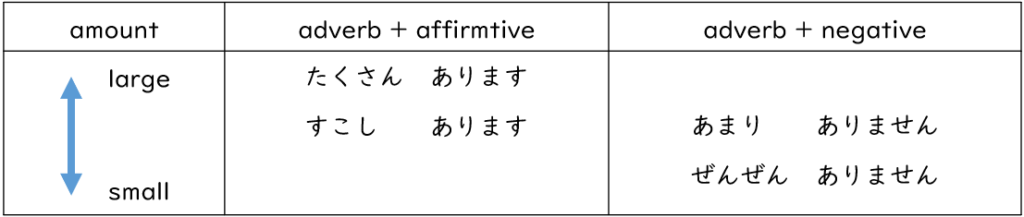
Example:
- お金がたくさんあります。- I have a lot of money.
- お金が全然ありません。- I don’t have any money at all.
A5 ~から、~。
Meaning:
- “から” links two clauses to indicate cause and effect. The first clause gives the reason, and the second clause shows the result.
- “どうして” is used to ask the reason for something, and “から” is used to explain it.
How to use:
[Sentence] から、[Sentence]
どうして [Sentence]か。…[Sentence] から。
Example:
- 妻の誕生日ですから、早く帰ります。- I will go home early because it is my wife’s birthday.
- 忙しいですから、ゲームをしません。- I don’t play games because I am busy.
- どうして早く帰りますか。…病院へ行きますから。- Why are you going home early? … Because I am going to the hospital.
- どうしてカラオケに行きませんか。…歌が好きじゃありませんから。- Why don’t you go to karaoke? … Because I don’t like singing.
Fun Japanese Lessons: Talk and Learn with Me!
Do you want to practice Japanese? Join my lessons!
If you’re interested, please contact me using the inquiry form below.